Last time, I mentioned my Kick Spindle. I don’t know how old a technology they are, but I first heard about them a little over two years ago. They are a very simple piece of machinery — a solid base, a central shaft and whorl, and the lower ‘kick’ whorl, supported at a 45° angle. Some have a hook on the shaft, some do not.
When I did my 2-hour spinning marathon the other night, I hurt myself. By the end of it, my right hip was sore jello. It didn’t particularly want to hold me upright, or move. I didnt think much of it; doing any repetitive action at all for two hours is somewhat asking for trouble. The next day, though, I discovered that there was more at play than muscle overuse.
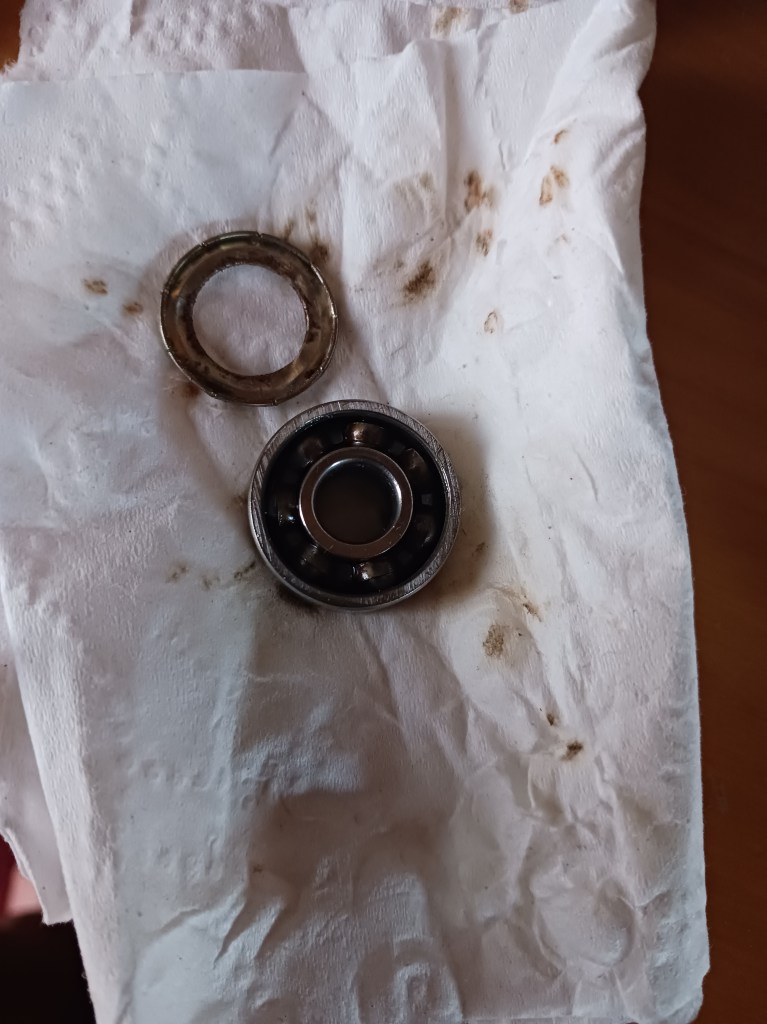
The central shaft sits into a bearing. In theory, this allows for swift and smooth spinning. I say in theory because this wasn’t the case. I dug the bearing out with a pair of forceps and inspected it. It wasn’t turning at all. Rust, dust, and possibly some denting in the cover made the bearing very difficult to spin.

I prefer to fix things wherever possible, so I cast my mind around what we have on hand. I don’t currently have WD 40. Olive oil would be sub optimal. I havent axle grease or even Vaseline. I do, however, have bike chain oil. A few applications and some time for it to penetrate the crud, and the bearing would now turn. But it still wasn’t turning WELL.
Time to research.
By the measurements, this is a standard 608 bearing – one of the most common small sizes. They are used on rollerblades, skateboards, scooters, fidget spinners. The one I have is a straight steel variety: the cheapest and lowest quality available. Known for being strong but noisy, relatively slow and not necessarily smooth, this is your basic budget bearing. The reviews rarely rave.
At the opposite end of the production range, you have solid ceramic bearings. Smooth and fast but pricey and fragile, these seem to be more the “serious hobbyist with money” option.
In the middle of the range, we have ceramic-hybrid bearings. The case and axle are steel, the bearing balls are ceramic. Smooth, quiet, and not prone to heating up with use, these seem to be the sought-after variety. I could buy 1 bearing for $13 or a package of 8 bearings for $24.
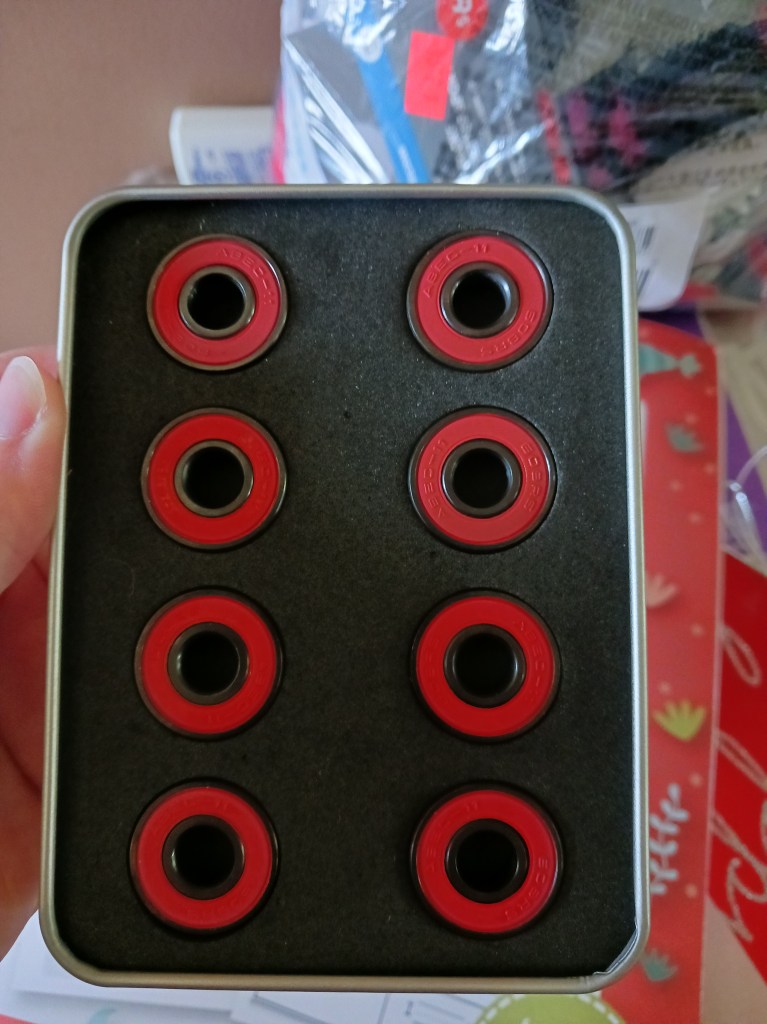
I certainly don’t NEED 8 bearings. I could potentially need one or two over the lifetime of the spindle, but 8 is excessive. However, assuming I use 1 and keep an extra, this leaves 6 bearings that I COULD choose to use as the basis for 6 more kick spindles of my own making. The technology is simple enough. I know I could make them. And potentially sell them. This would allow for a many-times return on the investment. Something to consider.
And in the meantime, my spindle is working much better
 Off The Beaten Path
One response to “Fixit”
sounds like a good idea. I like to fix things myself if I can!
LikeLike