My world lately has mostly been your basic childrearing, plus chivvying the kiddos through their homeschool curriculae. We’ve gotten a wee bit behindwards, so we’re working to catch up. One of them finished this year’s workbook just today. The others aren’t quite there yet.
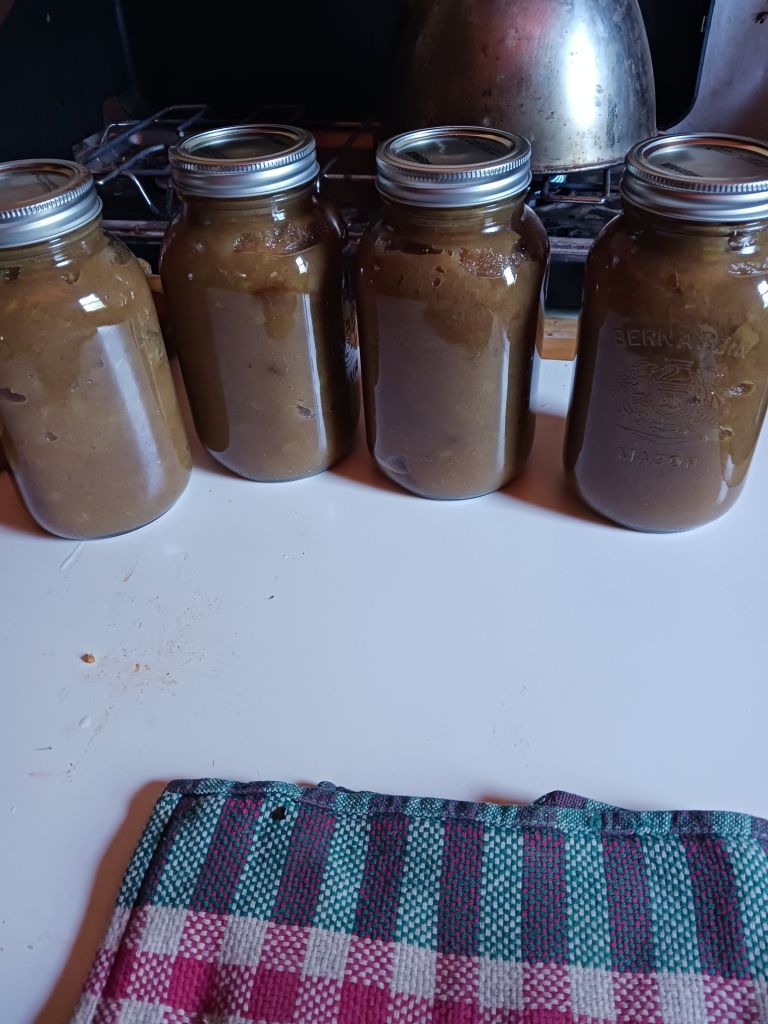
I’ve also made a few batches of Zapplesauce. For those unfamiliar with the word, it is mock applesauce using zucchini and apple cider. A similar mock pineapple can also be made.
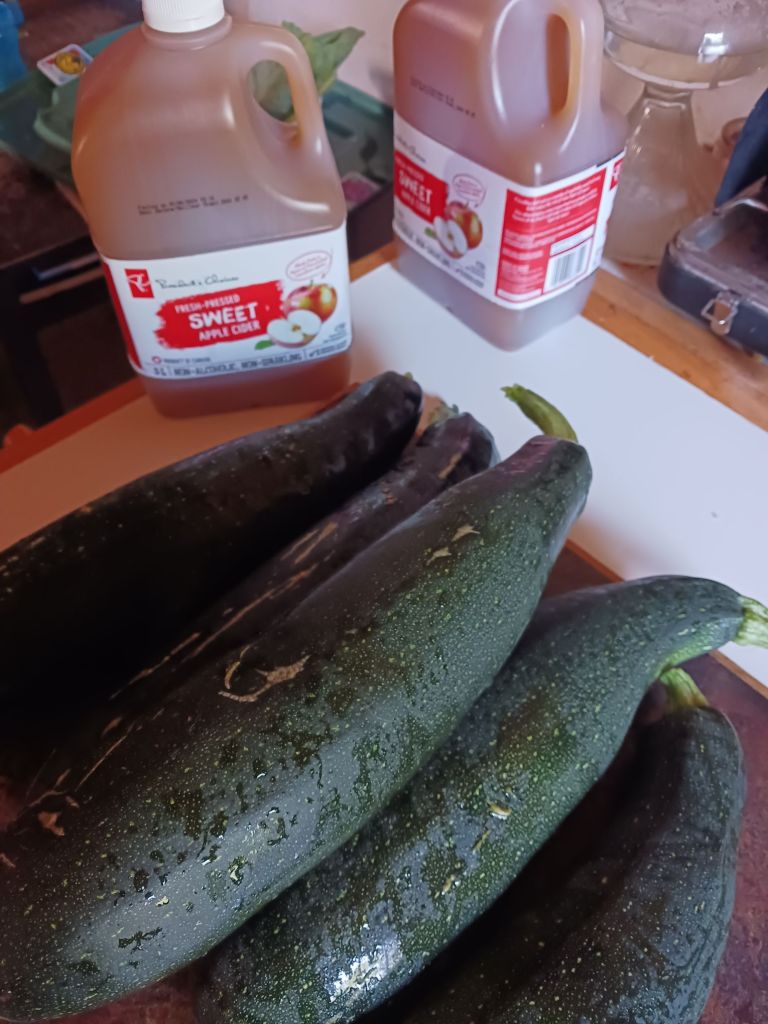
Approximately 5 large zucchinis and one gallon of cider makes 4L of quite tasty sauce. The colour isnt exactly right, and it needs spices to taste proper, but a little ginger, cinnamon and a wee bit lemon juice and you’ve got an ‘applesauce’ that the kids all declare delicious -with some extra, sneaky nutrition in it.
We’ve made a few changes to the furniture also. The big, shredded, smelly green couch has been removed. We have a smaller, more streamlined futon now, with a waterproofed sheet over it to keep either of the cats from ‘claiming’ it in unpleasant ways.
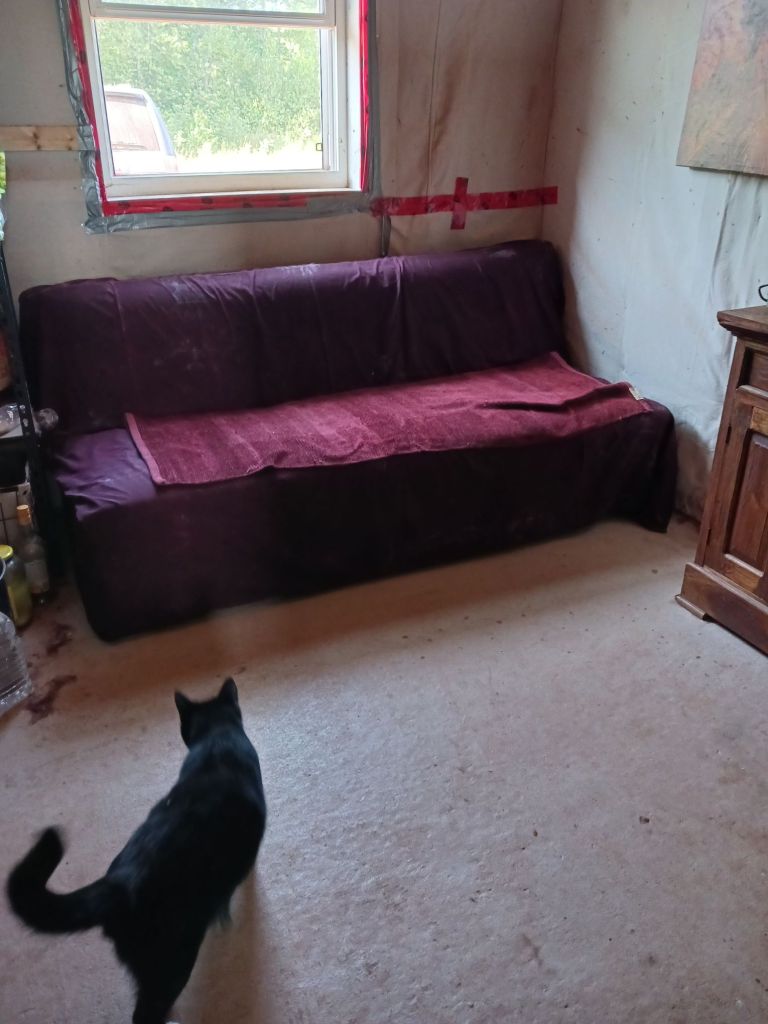
I waterproofed the sheet myself, which was an interesting project. A mix of 2c mineral oil blended with 2 lb paraffin and let to harden, then cut into small pieces and worked into the fabric with a hot iron. It took several hours and was extremely messy, but it does seem to work. I think if I was to do it again, I would use a tad less oil in the mix. This way, it has remained slightly greasy – enough to leave an oil mark on the concrete floor.
I also (with mom for an extra set of hands) applied peel-and-stick wallpaper to the rear of the wardrobe that now forms the wall between our bedroom and the living room. It is a large, dark piece of furniture and I wanted to lighten the space and make it feel as large as possible.
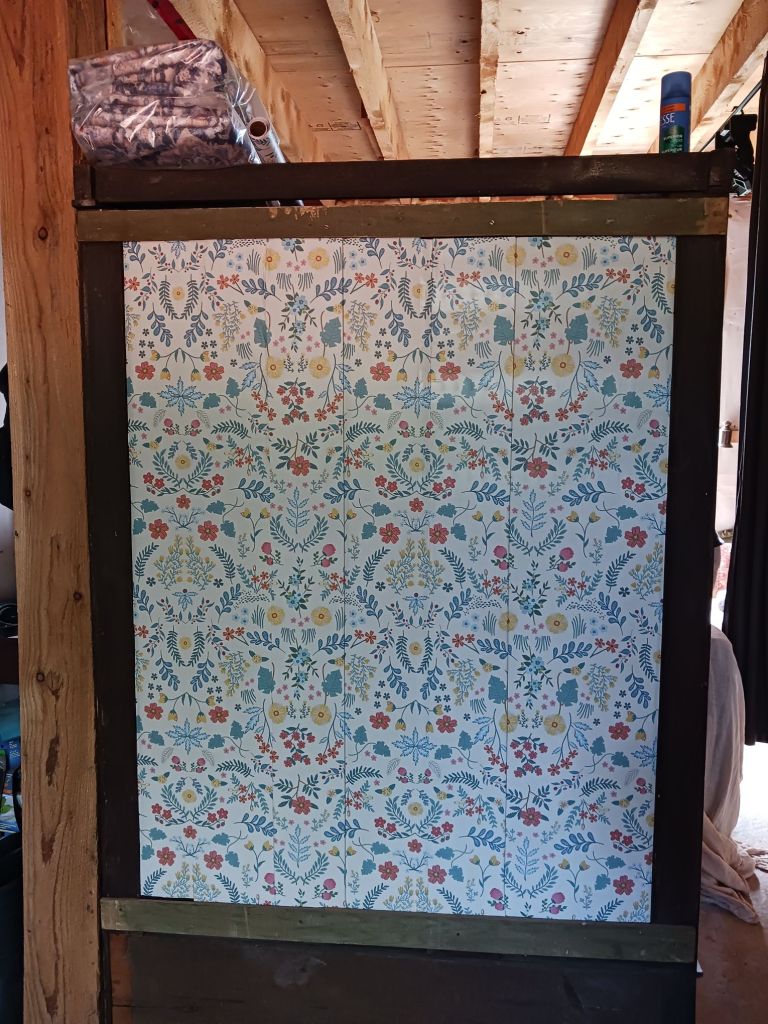
Peel and Stick paper is not as easy to apply as I would have first thought, especially to old, OLD wood with who-knows-what kind of surface coating on it. All the same, once the work was done, I think it looked rather nice. And as I had extra paper, I decided to redo the peeling ‘mexican tile’ on the back of the china cabinet that forms our backsplash as well.
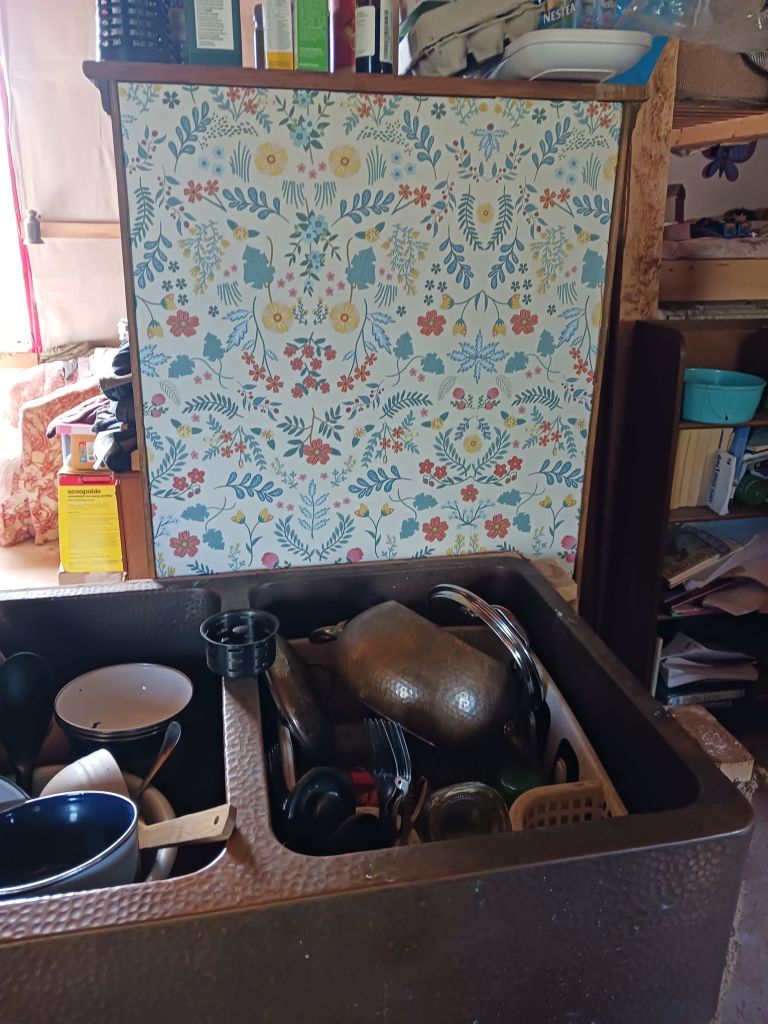
I still have work to do with the wardrobe. It is shallower than modern hangers, and things before had to be hung on an angle that was awkward and inconvenient. I decided to remove the internal bar altogether and put in hooks. For now, hangers can be used on the hooks, but ultimately this wardrobe will be in the entryway as our coat closet, and the hooks themselves will serve admirably. However, this wardrobe is VERY old and the wood on the back is quite fragile in places. So in order to be able to use hooks without them breaking the wood, I am going to sandwich the old wood between two layers of common strapping and attach the hooks to that. I have the strapping cut, I have the hooks, I just need the time, some math and an extra set of hands.
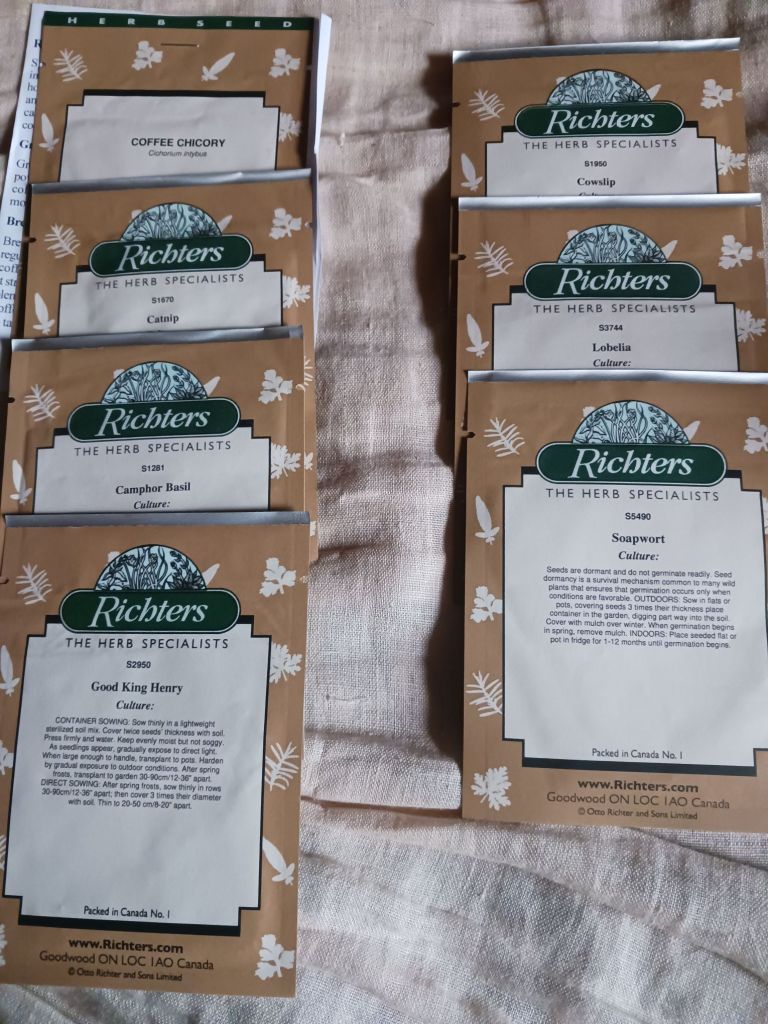
I have (yet another) seed order in. As I read and research, there are plants I decide that we need to cultivate for our health or the health of the land. This particular order, in the aftermath of an asthma attack, I went looking for lobelia seed. Lobelia, while too great a dose can be extremely harmful, is an excellent herb for breathing issues and congested lungs. I use mullein currently, but they work well together. I found the lobelia seed, but ordering only ONE pack of seed is cost prohibitive, so I spent some time searching through their catalogue.
None of my last packet of Common Soapwort germinated (my Rock Soapwort did, but not the common), so I got another packet of that and in so doing discovered that it needs some specialized action that I had been unaware of. Namely, it needs to be planted outside in fall and go through a winter of wet freeze. So, hopefully next spring, some will grow.
I was interested to read that camphor (that marvellously useful, pungent oil) is commercially sourced from a species of basil. I had expected something more treelike, in the way of eucalyptus. Given that we use only natural-fibre textiles, and those tend to be a tempting treat for moths, camphor as part of a packing-sachet is very valuable for keeping our woolen blankets and linen sheets un-munched and hole-free. Naturally, I picked up a packet of that seed.
Good King Henry is another perennial green that was once common and no longer is. Finding the seed isnt the easiest, and I’m told it’s a bit finicky to grow, but I shall do my best.
Catnip, I tried to plant 3 times this summer. I dont know if my seed was too old or if I did something wrong, but a whole packet of seed gave me 0% germination. So I shall try again next year with fresher seed.
The coffee chicory interests me for a couple reasons. 1) chicory is pretty. 2) chicory is a useful food and fodder crop. 3) chicory improves the soil in which it is planted. 4) this particular chicory has been selectively adapted for fleshier roots, thus superior for making chicory ‘coffee.’ Coffee is one of the things, being a tropical plant (zones 9 and higher) that will fall quickly out of availability in a fractured supply-chain situation. While chicory has none of the caffeine and the taste isnt QUITE right, the ability to have a hot, comforting cup of coffeelike brew is a morale boost on a cold day. We’re not coffee snobs here. We drink instant a good portion of the time. Decaf, in fact. And we have also had several of the roasted-grain-and-chicory coffeelike beverages that are available commercially amd enjoyed them.
The seed I am MOST interested in from this batch, though, is the Cowslip. It isnt one most North Americans would be overly familiar with, but I read a lot. I first heard of it in Watership Down as a child. Then, when my husband began reading the same book to our children last year, I was reminded of it. Very often, when I read about a plant, it makes me curious and I spend some time digging into it a bit. Cowslip is worth the digging! A fairly unassuming yet attractive plant, it is hugely useful. Edible, medicinal (for SO MANY THINGS!), a draw for pollinators, a foodsource for wildlife, and it will grow in damper soils (which I certainly have). Traditionally, an allegedly lovely wine can be made from it, too. I am quite looking forward to growing this plant!
Before I plant any of the new seed, though, I need to finish transplanting this years’ seedlings. I still have golden margeurite, echinacea, rugosa rose, hollyhocks, lamb’s ear, weld, marshmallow, betony, agastache, clove pinks and vanilla grass to plant out. Plus 1 currant, 2 kiwi and 4 grapevines. And the miscanthus grass, if I havent managed to kill it, yet, and at least one each of cottonwood and weeping willow.
 Off The Beaten Path